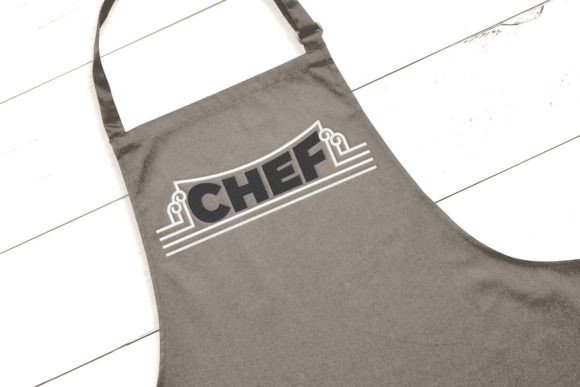
An Art Deco Chef Design for Craft Fair Sales
From the perspective of someone who stitches for markets, a design like Chef with Art Deco Border immediately catches my eye. It’s not a simple text logo; it’s a statement piece. The phrase “Saying yes to the chef is the new kiss the cook” hints at a modern, slightly playful twist on a classic kitchen sentiment, while the Art Deco border promises a touch of structured elegance. This combination gives it a premium, decorative feel that stands apart from more rustic or minimalist kitchen designs. It feels bold, intentional, and giftable.
Where This Design Shines on Market Products
When planning my booth display, I visualize where Chef with Art Deco Border would command attention. Its strength is in being a clear focal point.
- Aprons: This is a natural and high-value application. An apron is a chef’s canvas, and this design, centered or on a pocket, looks professional and stylish. It elevates a basic apron into a specialty item.
- Tea Towels & Pot Holders: Perfect for the kitchen category. On a towel, it becomes a decorative, usable art piece. The border gives it a finished look that feels more complete than a simple word.
- Tote Bags & Market Bags: For a kitchen-themed bag or a general-purpose tote, this design adds sophistication. It suggests quality and a love for cooking, appealing to food enthusiasts.
- Embroidered Patches: This design could be fantastic as a standalone patch. The border frames the word beautifully, making it a ready-to-apply badge for jackets, bags, or caps. It’s an easy, lower-price-point item that attracts buyers.
- Pillow Covers for Kitchen Nooks: A less obvious but charming application. On a small pillow for a breakfast nook or kitchen bench, it becomes decorative home decor, expanding its reach beyond purely utilitarian items.
- Fabric Pouches & Giftable Items: Stitched onto a handmade utensil pouch or a lined fabric bag, it turns a simple project into a branded, thoughtful gift. The Art Deco style feels specially made.
For a craft fair booth, I would make at least one standout sample, like a high-quality apron, to showcase the design’s potential. A real, tangible product draws customers in to touch the stitches and see the quality. For online listings on Etsy or other shops, a crisp photograph of that sample, alongside digital mockups, is crucial. The geometric border and clear lettering should photograph well, conveying the handmade quality effectively.
Practical Production & Selling Considerations
As a small shop owner producing batches for a fair, I need to assess the practicalities of Chef with Art Deco Border.
Design Clarity & Scale
This design appears to be a combination of text and decorative elements. The word “CHEF” is likely large and legible, but the Art Deco border may contain details. For production:
- Test on Scrap Fabric First: Always stitch the embroidery file on a scrap of your intended product fabric—a canvas apron, a linen tea towel, a cotton tote. This reveals how the stitch density behaves and if any small border details vanish on textured fabrics.
- Scale is Key: Evaluate if it works as a small accent (on a cap or a pot holder corner) or if it needs to be a large, central design to maintain the border’s impact. On a curved cap surface, small geometric details can distort. It likely excels as a medium to large focal point.
- Thread Contrast & Fabric Color: The design demands good contrast. On dark fabric, you must choose thread colors that pop. A test run confirms this. For batch production, sticking to a few high-contrast fabric colors (cream, black, navy) streamlines the process and maintains brand consistency.
Batch Production & Commercial Use
For repeatable production, I consider stitch density and hoop size. Dense stitch areas in the border could mean longer stitch times and more thread, affecting your cost per item. A manageable hoop size (like a 5x7 or 6x10) that fits the design comfortably is ideal for efficient production.
Critical Note: The product description mentions it’s an embroidery design, but does not specify file formats, exact hoop sizes, or commercial licensing terms. Before selling any finished product at a fair or online, I must verify the license of the digital embroidery file. Only use designs with clear commercial-use permissions for your handmade products.
Attracting Customer Attention at Your Booth
In the bustling environment of a craft fair, Chef with Art Deco Border has advantages. Its clear, single-word message (“CHEF”) is understood at a glance. The decorative border adds visual interest that makes people stop and look closer. It feels both niche (for kitchen lovers) and broadly appealing (for anyone who appreciates elegant design).
Displaying it on a variety of products—an apron hanging prominently, a tea towel folded nicely, a patch displayed in a frame—creates a cohesive kitchen category within your booth. This strengthens your booth’s display and helps customers imagine the design on different items. The premium, Art Deco feel can elevate the perceived value of your entire handmade product line, allowing for a slightly higher price point compared to simpler designs.
Final Designer Advice Before the Fair
To ensure success with this design for your craft fair products or Etsy shop:
- Create at least one physical mockup on the product you think sells best. Feel the stitches, check the stability with the right stabilizer, and see it in person.
- Compare how it looks on different fabric colors you plan to offer. Does it look bold on light fabric and dramatic on dark?
- Review the design’s spacing and stitch-out on your machine. Are there any tiny lettering details in “CHEF” that might need adjustment for super-small sizes?
- Confirm all commercial-use rights for the embroidery file. Your weekend sales depend on this.
- Plan your booth layout to let this design shine. Group its products together to create a mini “chef’s collection” that attracts the cooking enthusiast walking by.
Chef with Art Deco Border is more than just a kitchen design; it’s a style statement. With careful production and thoughtful display, it can become a standout, profitable piece in your handmade market lineup.