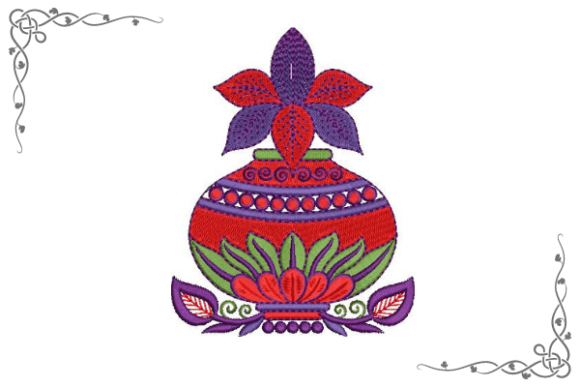
Indian Decoration: A Handmade Market Embroidery Review
As an embroidery designer preparing my products for a weekend craft fair, every design must earn its place in the booth. I evaluate not just its beauty, but its sellability, its practicality in production, and how it will catch a customer’s eye across a bustling market. Today, I’m reviewing a design titled Indian Decoration. The description suggests a traditional Indian embroidery design that adds a cozy and artistic feel. Let’s walk through its potential as a craft fair product.
First Impression: Cozy Artistic Appeal
The name Indian Decoration evokes a specific mood. It’s not minimal or modern. It leans toward artistic, cozy, and inherently decorative. This tells me it’s a pattern meant to adorn, not to be subtle. For a handmade market, this is a strong starting point. It promises visual richness and a sense of crafted tradition. Customers browsing for home decor or unique apparel are drawn to that "artistic feel"—it suggests a premium, handmade quality beyond a simple graphic.
Where Indian Decoration Stands Out on the Sales Table
My booth will feature embroidered tote bags, aprons, tea towels, pillow covers, caps, and small pouches. I need to visualize where this design will shine.
Prime Candidates for Maximum Impact
- Pillow Covers: The description explicitly mentions decorative pillows. This is likely its natural home. On a pillow, the cozy artistic feel translates directly into perceived value.
- Tote Bags & Market Bags: A larger canvas allows the decorative pattern to become a focal point. It turns a functional bag into a statement piece.
- Aprons: An embroidered apron with a rich design like Indian Decoration feels special, moving it from utilitarian to gift-worthy.
- Tea Towels & Kitchen Linens: Here, the "cozy" aspect pairs perfectly with a home kitchen. It elevates a simple towel.
Considerations for Smaller Items
- Caps & Patches: A traditional decorative pattern can work, but scale is critical. At a small size on a curved cap surface, intricate details may lose clarity. It needs to be tested.
- Fabric Pouches & Small Gift Items: As an accent, it could be charming, but the design might need to be simplified or used as a border element to avoid overwhelming a small pouch.
The key is that Indian Decoration feels like a focal design, not a tiny accent. It demands space to be appreciated.
Practical Production & Selling Points
Turning a digital embroidery file into a profitable handmade product requires a practical eye.
Batch Production and Visual Consistency
For craft fair sellers, repeatability is gold. A decorative pattern like this, if it’s well-balanced, can be excellent for batch production on items like pillow covers or tote bags. It creates a strong, consistent brand look across your booth. However, I must advise: always test the design on scrap fabric first. Check the stitch density on your intended fabric—a dense design on a textured towel or thick canvas might require adjustments in stabilizer or thread tension.
Photographing for Online Listings
For Etsy sellers and digital sellers using printable mockups, this design has potential. A "cozy and artistic" pattern photographs well when you use warm, natural backgrounds—think wooden tables or soft textiles. It tells a story. Ensure your photos capture the texture of the stitches, as that handmade quality is what sells.
Customer Attention at the Booth
In a real-world scenario, color and contrast are everything. Indian Decoration will likely involve multiple thread colors. On a dark fabric, you need high-contrast threads for it to pop. On a light fabric, it can appear soft and detailed. Have at least one real mockup in your booth made with optimal contrast. A customer’s hand will reach out to touch the embroidery—the texture sells it.
Careful-Use Notes for the Embroidery Designer
Here are my direct notes from a production perspective, crucial before you stitch this onto products for sale.
- Scale and Clarity: If the design has tiny details or small lettering, it may become muddy at smaller hoop sizes. Confirm the minimum hoop size the file supports without losing integrity.
- Fabric Texture: Textured fabrics like linen or terrycloth can obscure intricate patterns. A simpler section of the design might be better for towels, while the full pattern shines on smoother cotton or felt for patches.
- Stitch Density: High density areas can cause puckering on lightweight fabrics or make caps stiff. Use the correct stabilizer and consider reducing stitch density if possible for comfort items.
- Color Planning: Review the thread color sequence. For batch production, consistency is key. Decide on a standard color palette that works on both light and dark base fabrics, perhaps creating two versions for your product line.
- Commercial Readiness: The description mentions it’s a machine embroidery design. As a boutique maker, you must confirm commercial licensing before selling finished products. Never assume.
The Final Booth Strategy for Indian Decoration
In my craft fair booth, I would place Indian Decoration products in the "Home & Decor" section. A beautifully embroidered pillow cover would be my centerpiece sample. Next to it, I’d display matching tea towels and a tote bag, showing the design’s versatility. This creates a cohesive collection that customers can envision in their homes.
For engagement, I’d point out the traditional artistry and the handmade stitchwork. This design isn’t "cute" or "funny"—it’s decorative and premium. That elevates the product’s value and justifies a higher price point for creative entrepreneurs.
Ultimately, Indian Decoration holds strong potential for the House Home category. Its success depends entirely on our execution as embroidery business owners: choosing the right products, perfecting the stitch quality, and presenting it as a cohesive, artistic story. My advice is to create that one perfect pillow cover mockup first. See it in person. That will tell you everything about how it will perform at the fair.